Queue Management System in Saudi Arabia: 7 Ways It Boosts Customer Experience
Every minute a customer waits is a minute they judge your brand. In busy clinics, banks, and telecom outlets across the Kingdom, that judgment forms fast. A modern queue management system in saudi arabia turns dead waiting time into a smooth, predictable, and even pleasant experience. This 2026 article breaks down seven concrete ways smart queuing lifts customer satisfaction and keeps people coming back.
Unlike a generic buyer checklist, this guide focuses on the human side: perception, fairness, and trust. Those are the forces that decide whether a visitor returns or churns.
Why a Queue Management System in Saudi Arabia Shapes Customer Experience
Psychologists have long noted that unexplained, unfair, or idle waits feel far longer than they actually are. A queue management system in Saudi Arabia attacks all three problems at once by communicating clearly, enforcing fair order, and keeping customers productively occupied.
The payoff is measurable. According to the global customer-experience research summarized by the Harvard Business Review, reducing customer effort is one of the strongest predictors of loyalty. Shorter, calmer waits reduce effort directly.
The 7 Experience Wins
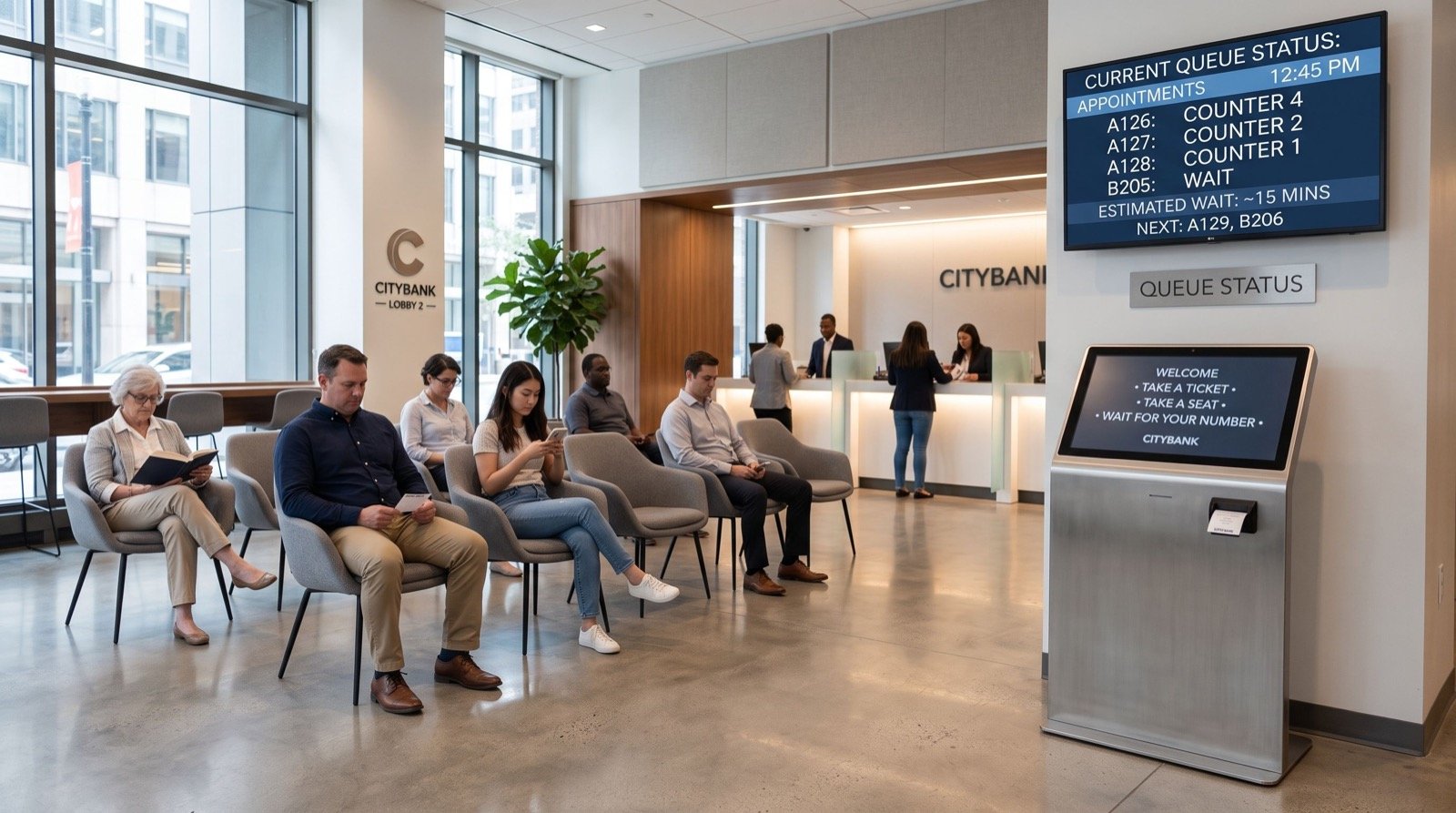
- Transparency: Live now-serving displays and honest wait estimates remove uncertainty.
- Fairness: A single digital order stops line-jumping disputes and protects staff from conflict.
- Freedom: Virtual tickets let people wait in a cafe or their car instead of a crowded lobby.
- Personalization: Routing by service type sends each visitor to the best-qualified agent.
- Speed: Balanced counter loads shrink the longest waits during peak hours.
- Feedback: Post-service surveys capture sentiment while the visit is still fresh.
- Consistency: Every branch delivers the same standard, protecting brand reputation.
Turning Waiting Into Engagement
Idle time is wasted opportunity. Digital signage can show product offers, health tips, or account reminders while customers wait. In telecom stores, this is prime upsell real estate. In clinics, it educates patients and reduces anxiety before consultations.
A Closer Look at the Data Advantage
Experience improvements only stick when you can measure them. The table below shows the metrics that matter most and what each one reveals about your service.
| Metric | What It Reveals | Experience Impact |
|---|---|---|
| Average wait time | Lobby pressure and staffing fit | Lower waits, higher calm |
| Abandonment rate | How many give up before service | Fewer lost customers |
| Service time per agent | Workload balance and training gaps | More consistent quality |
| CSAT score | Direct customer sentiment | Loyalty and referrals |
| Peak-hour load | When demand spikes | Smarter scheduling |
Working with reliable local experts during setup ensures these dashboards are configured around your real goals, not generic defaults that nobody reads.
How Does a Queue System Improve Staff Experience Too?
Customer experience and staff experience rise together. When the system handles routing, calling, and recall, agents stop refereeing crowds and start focusing on service. Clear workload data also lets managers schedule fairly, which reduces burnout and turnover.
Integration deepens the benefit. Pairing queuing with attendance and workforce tools, such as the Hampster Plus device, gives supervisors a unified view of who is present, who is serving, and where help is needed. That coordination keeps counters staffed exactly when demand peaks.
Reducing Conflict at the Counter
- No more arguments over who was first.
- Transfers happen digitally, without customers repeating themselves.
- Supervisors can reassign load instantly during a rush.
- Quiet, orderly lobbies lower stress for everyone.
Sector Snapshots in 2026
Healthcare clinics use queuing to protect patient privacy and triage urgent cases. Banks route VIP clients and enforce compliance. Telecom retailers maximize counter time to explain plans and devices. Government service centers chase higher citizen-satisfaction scores mandated by national modernization goals. One configurable platform serves all of these without custom code.
A Practical Rollout Tip
Start where the pain is loudest. Deploy at your single busiest branch, capture a four-week baseline, then use that proof to fund a wider rollout. Early, visible wins make the rest of the program far easier to approve and adopt.
Designing a Waiting Experience Customers Actually Enjoy
Great experience is designed, not accidental. Once the core system is live, layer on small touches that compound into loyalty. Each one is inexpensive, yet together they reshape how visitors feel about your brand.
- Honest estimates: Slightly over-estimate the wait, then beat it. Customers reward pleasant surprises.
- Comfort cues: Seating, clear signage, and charging points make short waits feel effortless.
- Proactive updates: SMS progress messages reassure virtual-queue customers that they are not forgotten.
- Graceful recovery: When delays happen, acknowledge them openly and offer a small gesture of goodwill.
- Closing the loop: Thank visitors by name at the counter to end the journey on a human note.
These details cost little but signal respect for the customer’s time, which is exactly what builds the quiet loyalty that keeps people choosing you over a faster-looking competitor.
Connecting Feedback to Action
Collecting survey scores is only half the job. The organizations that win treat every low rating as a specific signal, tracing it back to a branch, a time slot, or an agent, then coaching accordingly. Over a quarter, this feedback loop turns scattered complaints into a clear, prioritized improvement roadmap that lifts satisfaction across the whole network.
Frequently Asked Questions
Does a queue management system in Saudi Arabia really improve loyalty?
Yes. By reducing uncertainty, enforcing fairness, and shortening waits, it lowers customer effort, which research consistently ties to repeat visits and positive word of mouth.
Can customers wait remotely instead of in the lobby?
Absolutely. Virtual queuing lets visitors scan a QR code, hold their place, and receive an SMS when their turn is near. This reduces crowding and gives people their time back.
Will it work for both appointments and walk-ins?
A good platform blends pre-booked appointments and walk-ins into one fair flow, so neither group feels overlooked and counters never sit idle.
How quickly do customers notice the difference?
Most organizations see calmer lobbies within days and measurable CSAT gains within the first month, especially once staff are comfortable with the new workflow.
Conclusion
Customer experience is won or lost in the waiting area. A thoughtfully deployed queue management system in Saudi Arabia delivers transparency, fairness, and speed while lifting staff morale at the same time. Focus on clear communication, virtual queuing, and data you will actually act on. In 2026, that combination turns waiting from a complaint into a reason customers choose you again. Map your busiest branch and start measuring today.